

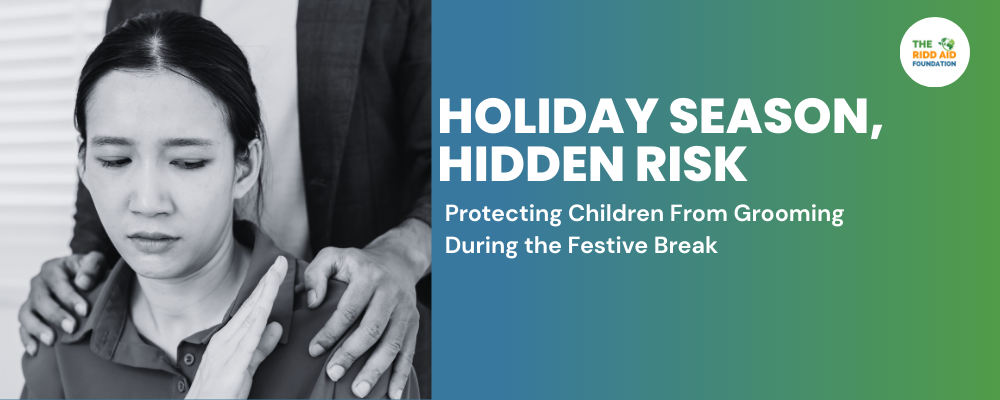
The holiday season is a time many families look forward to. Schools close, routines pause, and children finally enjoy the freedom they’ve anticipated for weeks. Parents get a short break from school runs, teachers take a well-deserved rest, and homes become livelier as festivities begin.
But with the change in routine comes a shift in supervision. Children spend more hours at home, in neighbourhoods, at relatives’ houses, or online, often without the structured oversight the school environment naturally provides. This freedom can be healthy and enjoyable, but it also opens the door to risks that parents may not immediately recognise.
Among these risks, one stands out as the most serious and least discussed: child sexual grooming.
Predators often take advantage of festive seasons because children are easier to access, and adults are distracted by celebrations, travel, and family gatherings. Groomers use friendliness, attention, gifts, and affection to build trust with a child, slowly lowering boundaries until exploitation begins.
They may appear as neighbours, family friends, older teenagers, or even trusted adults. They may initiate contact in person or online. What seems like kindness can quickly become manipulation.
How Parents Can Strengthen Protection This Season
Holiday protection is not about creating fear; it is about increasing awareness, communication, and boundaries. Here are practical steps that help keep children safe:
1. Know where your child is, and with whom.
Keep track of their daily movements, sleepovers, play visits, and outings. Be clear about who is supervising them.
2. Profile the adults and older teens your child spends time with.
This simply means understanding their relationship to your family and ensuring they are trustworthy. Holidays are not the time to leave children with strangers or barely-known acquaintances.
3. Maintain open communication.
Encourage your child to tell you about their day, what they did, who they met, what they received, and what made them uncomfortable. Conversations should feel safe, not like an interrogation.
4. Teach body boundaries in simple, age-appropriate language.
Children should know they can say no to unwanted touch, gifts, secrets, or favours, even from familiar people.
5. Monitor online activity.
More free time often means more internet access. Predators also operate digitally. Keep devices in shared spaces when possible, use parental controls, and stay involved.

Our Commitment at The Ridd Aid Foundation
This holiday season, our team is continuing school campaigns and community outreach online to help children, teachers, and parents understand the warning signs of grooming. Prevention begins with awareness and your vigilance as a parent or guardian makes the greatest difference.
The holidays should be a joyful time for every child. With informed guidance and attentive protection, families can enjoy the season while keeping children safe from those who may try to take advantage of their innocence.
If you would like digital safety resources or support on recognising grooming behaviours, our team is available to help. To support parents, a comprehensive digital safety guide has been created. It explains how to recognise warning signs, understand the relevant laws, and take practical steps to protect children from sexting related exploitation.