
When ‘Just Joking’ Becomes Assault.
Many young people are growing up in a world where the boundaries between playful behaviour, flirtation, harassment, and assault are increasingly blurred. Common phrases such as “It was only a joke” or “They did not really mean no” continue to excuse harmful conduct that violates the dignity and autonomy of children and adolescents.
As digital communication becomes central to teenage relationships, a message, a screenshot, or an unsolicited image can have the same impact as a physical act. Consent is no longer a topic that can be limited to classrooms or whispered conversations; it has become a crucial issue that demands attention. It is an essential skill for survival in the digital age.
Across many communities, people still excuse harmful behaviour among teenagers with phrases like “boys will be boys” or “girls should know how to handle attention.” These ideas create a dangerous environment where harassment is brushed aside as play and where teenagers learn to doubt their own boundaries. In today’s digital age, the line between joking behaviour and assault is becoming increasingly blurred, especially as interactions now happen through social media, private messages and online groups. What young people call banter often hides actions that amount to violation.
Consent is one of the most misunderstood concepts among teenagers worldwide. Many believe it only applies to sexual intercourse. Others think it does not matter in the context of friendships or playful teasing. The digital space has made this confusion even worse. Teens forward explicit memes, share sensitive images, pressure each other for photos, or make sexual comments, and then claim it is “just a joke.” What they call jokes can leave others feeling embarrassed, unsafe or violated. Without proper guidance, these patterns become normalised and can escalate into sexual assault both online and offline.
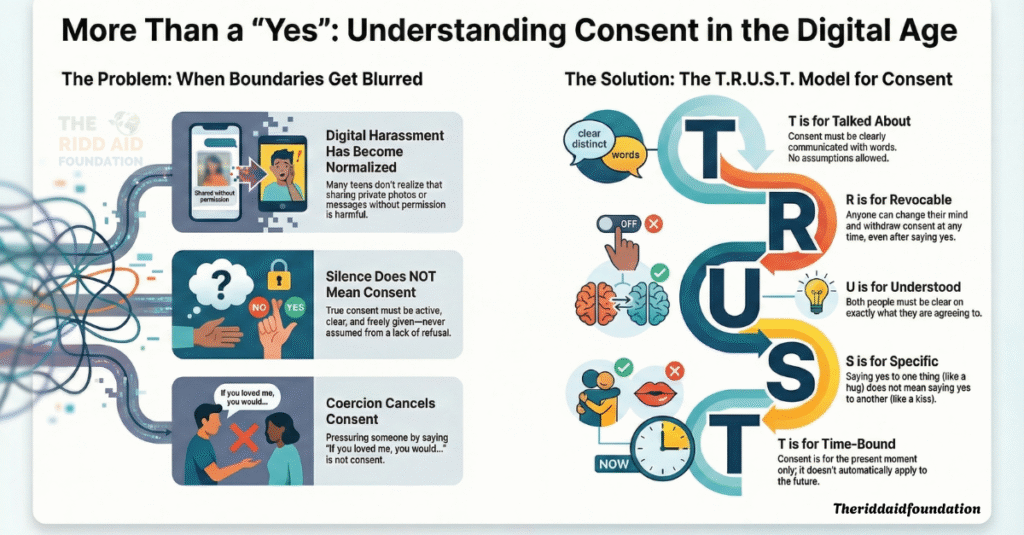
Technology has given teenagers new tools for connection, but it has also provided new ways to harm one another. Unsolicited sexual messages, sharing someone’s photo without permission, recording classmates without their knowledge and making sexualised comments under the guise of humour are all forms of digital harassment. When left unaddressed, these behaviours teach young people that boundaries do not matter. They also create a pathway to more serious abuse, especially where power, fear or silence are involved.
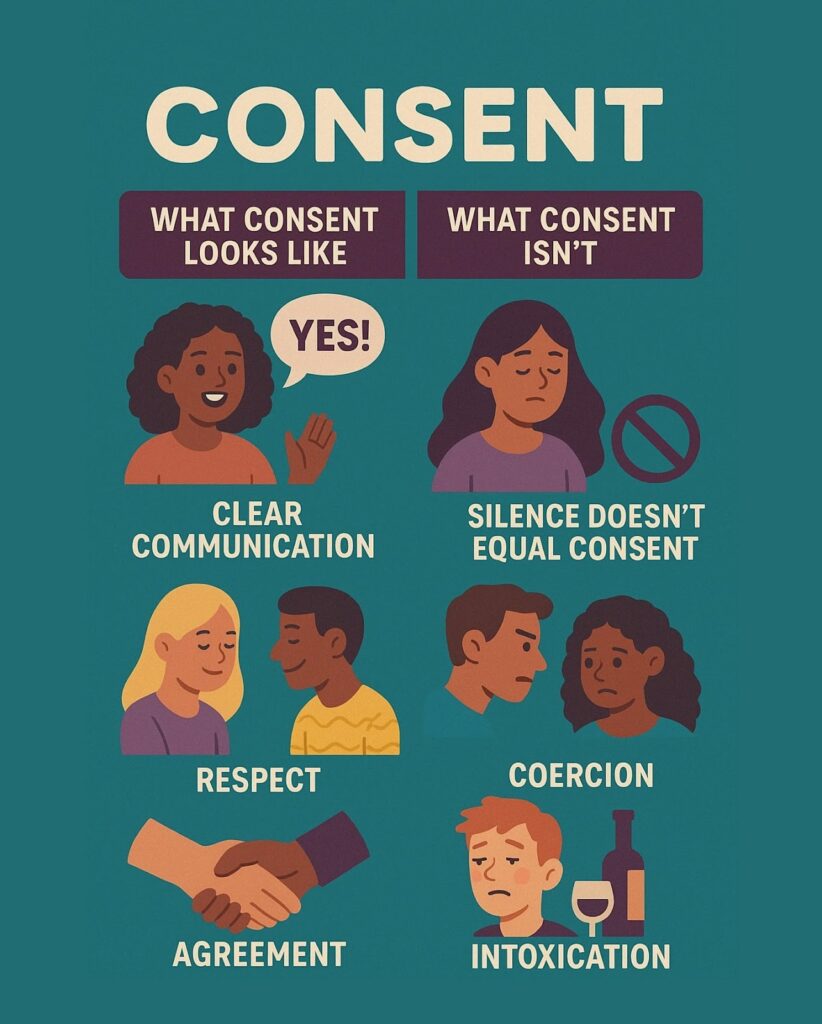
Parents and educators must now play a more active role. Teenagers cannot learn consent from peers who are equally confused or from a society that still laughs off harmful behaviour. Young people need clear, honest and age-appropriate conversations about boundaries, respect, communication and accountability. They must understand that consent is not a single moment but an ongoing agreement. It must be freely given, clearly expressed and always respected. Silence is not consent. Fear is not consent. Pressure disguised as play is not consent either.
Consent education protects both potential victims and potential offenders. When teenagers understand what respectful behaviour looks like, they are less likely to cross boundaries that could lead to serious emotional or legal consequences. They are also more likely to speak up when they feel uncomfortable or when they witness a friend being harmed. Creating this awareness is one of the strongest tools Nigeria has for reducing sexual assault among young people.
Many young people believe that as long as a person does not verbally refuse, the action is acceptable. Silence, freezing, fear, or uncertainty are never forms of consent. True consent must be active, clear, and freely given.
Understanding Consent in Everyday Situations
To support young people, consent must be explained through scenarios that reflect their lived experience. For example:
A boy repeatedly requests photos from a girl who has stopped replying. This is not flirting. It is harassment.
A teenager shares a screenshot of a private conversation with a friend’s romantic message. This breaches privacy and digital consent.
A student takes a video of a classmate without permission and circulates it in a group chat. This is a violation of autonomy and can be prosecuted.
A boyfriend tells a girl she must agree to his request if she truly cares for him. This is coercion, and coercion cancels consent.
These examples demonstrate that consent is relevant far beyond sexual activity. It is about respect, personal agency, and safety.
The T R U S T Model for Teaching Consent
The Ridd Aid Foundation uses a simple and practical framework that helps teenagers understand their rights and responsibilities.
T – Talked About
Consent must be communicated clearly. No assumptions are allowed.
R – Revocable
A person can change their mind at any time, even after initially saying yes.
U – Understood
Both parties must fully understand what they are agreeing to.
S – Specific
An agreement to one act does not extend to another. Each action requires a separate yes.
T – Time Bound
Consent is valid only in the present moment. It does not roll over into the future.
This model gives young people a clear tool for navigating boundaries online and offline.
Our organisation now offers a youth consent education programme designed specifically for schools, youth groups and community centres. The programme teaches young people how to recognise harmful behaviour, set boundaries, navigate digital communication responsibly and build healthier relationships. It also supports parents and teachers with tools to guide these conversations in a simple and culturally relevant way.
The digital age has changed how teenagers interact, but it has not changed their need for safety, dignity and respect. When young people learn the true meaning of consent, what once passed as a harmless joke is recognised for what it truly is. A line that must never be crossed.